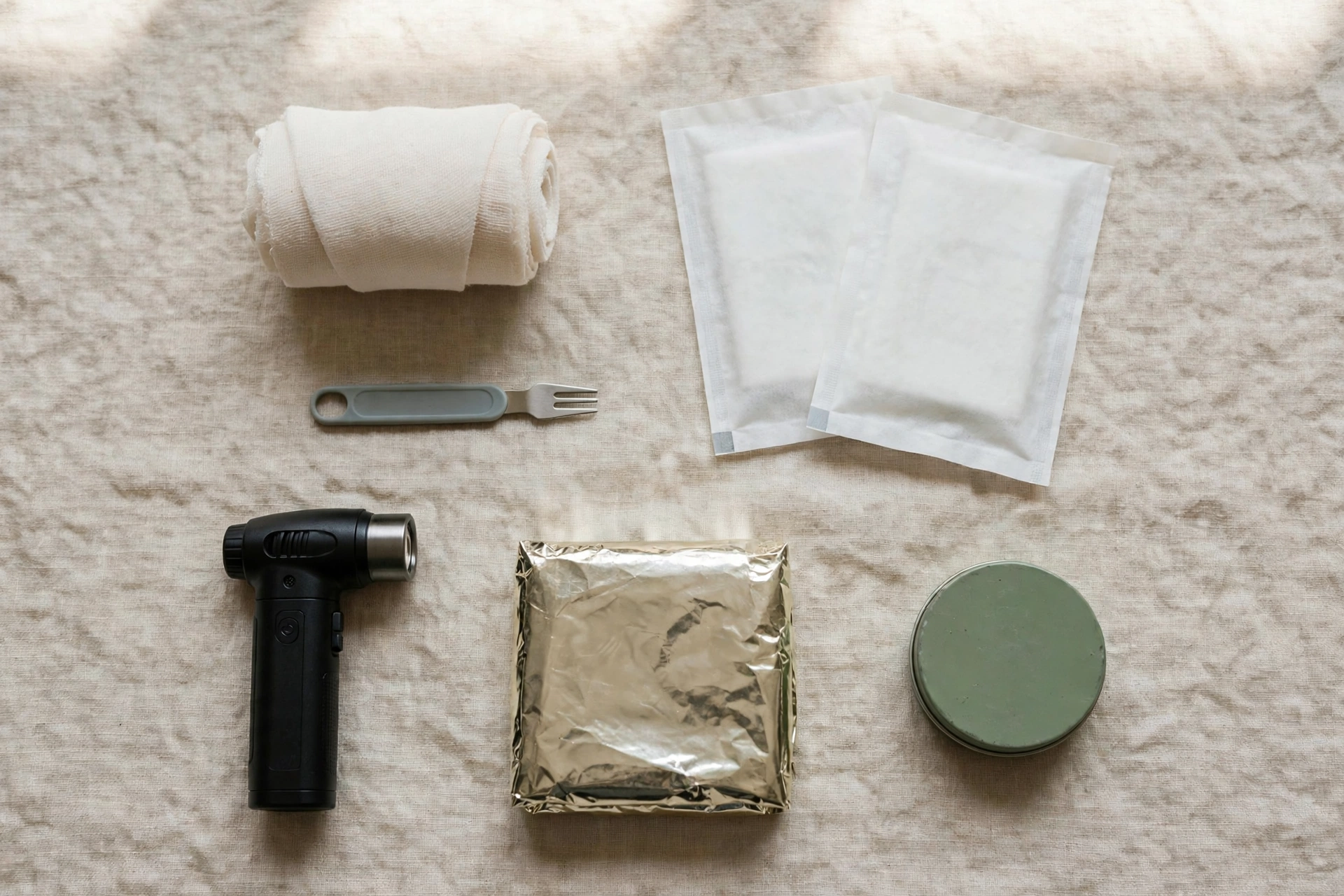
Why a first-aid kit earns its space
Most dog-trip injuries are small, badly timed and far from help: a sliced pad on a coastal path at 6pm, a tick found at the campsite, a sting on a Sunday. A first-aid kit buys you the calm, competent hour between the incident and professional help — stopping bleeding, keeping a wound from worsening, keeping a stressed dog still enough to travel. It fits in a pouch smaller than a wash bag. One boundary first: this is first aid, not veterinary advice. Dogs hide pain and deteriorate fast; if you’re unsure whether something needs a vet, it needs a vet.
What goes in: the core kit
Keep it compact enough that it actually travels with you — a kit left in the hallway helps nobody:
- Sterile gauze pads and a conforming bandage — cover wounds, press on bleeding.
- Self-adhesive vet wrap — holds dressings without tape on fur.
- Saline wash or bottled water — flush grit from cuts.
- Antiseptic wipes — clean around, not inside, deep wounds.
- Tick remover, the forked kind — fingers leave mouthparts behind.
- Blunt tweezers — thorns, grass seeds, splinters.
- Styptic powder — broken nails bleed dramatically.
- Digital thermometer — normal is roughly 38–39°C; the real number helps phone triage.
- Soft fabric muzzle — even gentle dogs snap in severe pain.
- Gloves and a foil blanket — cleaner wound care; warmth for shock or a soaked dog.
- A card with your vet’s number and insurance details — in the pouch, not just the phone.
Leave human painkillers at home: ibuprofen and paracetamol can seriously harm dogs. Call a vet before giving anything, every time.
Cuts, pads and bleeding: what you can do roadside
Cut pads are the classic British walking injury — flint, glass near car parks, shells on beaches. Press gauze on firmly for five minutes before peeking; paws bleed freely, but most cuts look worse than they are. Then flush with saline, cover with gauze, wrap with vet wrap — snug, not tight. Walk out calmly and call the vet, because deep pad cuts sometimes need stitches. Remove visible thorns with tweezers and watch for swelling — grass seeds can migrate and abscess, especially around ears and paws. Clean, cover, keep the dog quiet; let a professional decide the rest.
Heat, ticks and adder bites: the British summer risks
Heat kills dogs faster than most owners expect. Learn the signs: excessive drooling, glazed eyes, stumbling, vomiting or collapse. Move to shade immediately, pour cool (not ice-cold) water over the body, offer small sips, and get to a vet without delay. Prevention is the real kit: walk early or late, carry water always, never leave a dog in a car on a warm day. Check for ticks after every walk — ears, armpits, groin, between toes — twist them out with the remover and note the date. Adders live on British heaths and moors; bites are uncommon but serious, so keep the dog still, carry them if you can, and get to a vet urgently.
When it’s a vet-now emergency
First aid has a hard edge. Drive to the vet now — using the kit only to stabilise — for bleeding that won’t slow after ten minutes of pressure, any sign of heatstroke or collapse, suspected poisoning (bring the packaging), breathing difficulty or a swollen face after a sting, a suspected adder bite, and bloating with retching but nothing coming up. Before every trip, save the address of one emergency vet near your destination — the RCVS “find a vet” tool covers the whole country, and a two-minute search from the sofa beats a panicked one at 11pm on a country lane.
Storing the kit and practising before you need it
Keep the pouch in the same place every trip and check it twice a year: saline and wipes expire, vet wrap loses its stick, the vet-number card must stay current. Replace used items the day you get home. Rehearse the two skills that matter under pressure — wrapping a paw and fitting the muzzle calmly — for five minutes on a relaxed dog with treats. Both are miserable to learn for the first time in the rain on a frightened animal.
First-aid questions, answered
First-aid questions, answered
Can I give my dog human painkillers on a trip?
No — not without a vet's explicit instruction. Ibuprofen and paracetamol can be dangerous for dogs, and safe doses vary by animal. Pack the vet's phone number instead of improvising, and call before giving anything.
What should I do about a tick I find on my dog?
Remove it promptly with a tick remover, gripping close to the skin and twisting until it releases. Don't squeeze the body or leave mouthparts behind, then note the date — mention it if your dog seems unwell in the following weeks.
How do I know if it's heatstroke or just panting?
Post-exercise panting settles with rest, shade and water. Heatstroke looks different: excessive drooling, glazed eyes, wobbliness, vomiting or collapse. Cool with water (never ice) and get to a vet — it can turn fatal fast.
Do I really need a muzzle in a first-aid kit?
Yes — not for aggression, but because even gentle dogs can snap in severe pain. A soft fabric muzzle that still allows panting protects whoever is treating them, including you.